Reported execution: a durable pen became a machine-written book
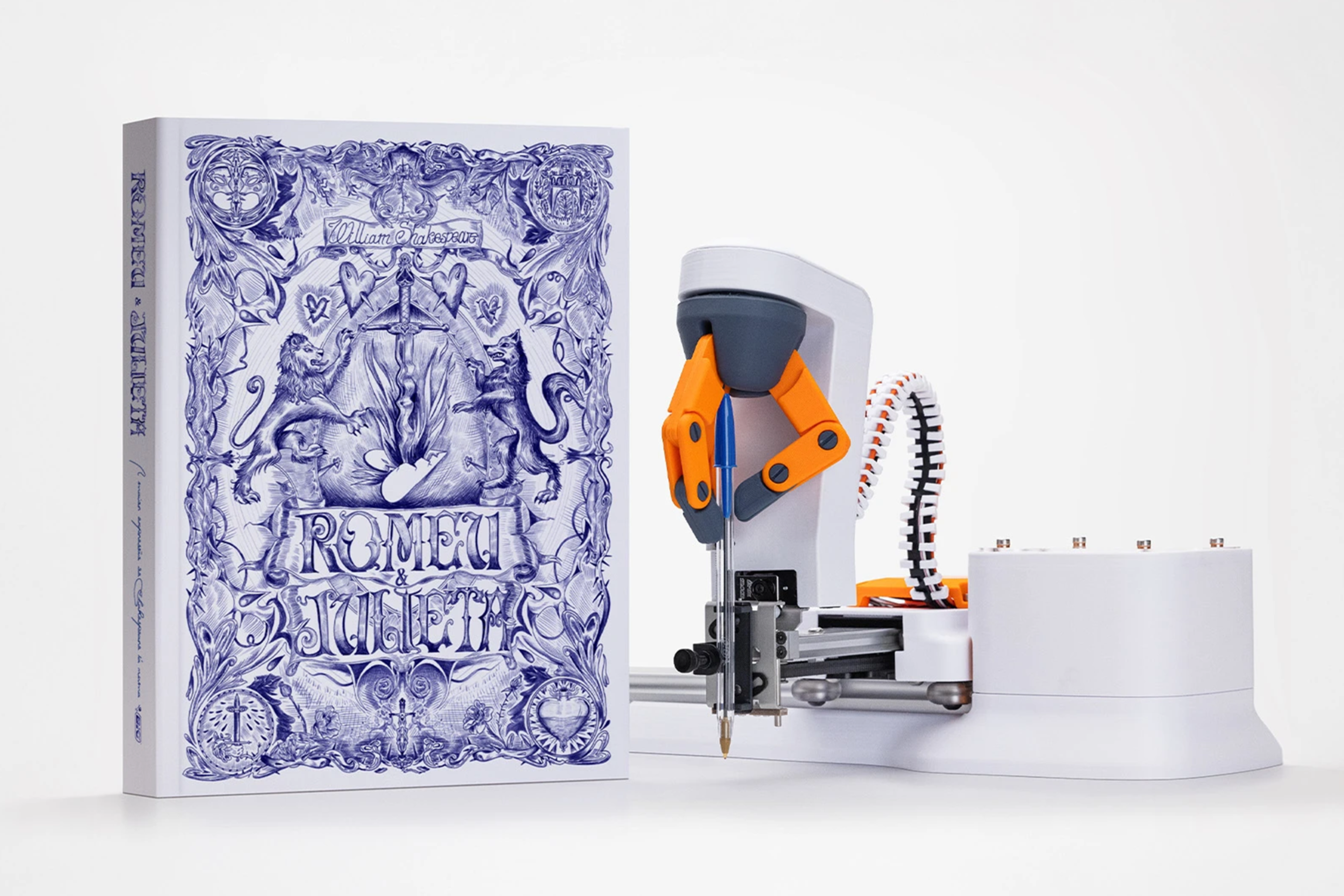
WPP says BIC and VML trained a bespoke AI on Shakespeare’s original handwriting, then used a robotic arm to write a 212-page Romeo and Juliet edition in Brazil. The stated demonstration was that one BIC Cristal Dura+ could complete the book, turning a familiar durability claim into an object that made the writing process visible.
The machine is central to the work’s visual logic. A robot holding an ordinary blue pen turns a product proof into a performance, while the historic-handwriting reference supplies a deliberately unlikely bridge between literary heritage and a mass-market tool.
Our reading: resemblance is not historical recovery
The charming premise is an interpretation of handwriting, not a recovered Shakespeare manuscript. That distinction matters because AI-assisted style transfer can look authoritative even when its purpose is theatrical. The campaign is strongest when it presents the book as a contemporary BIC experiment rather than an authentication claim.
Its product insight is unusually concrete: endurance is hard to dramatize in a still ad, but a full handwritten volume gives it a time-based shape. The literary reference earns attention; the pen completing the task is the brand proof.
Production lesson: define what the model is allowed to imitate
Any project trained on historical marks should specify its source material, the limits of similarity and the language used to describe the result. Documentation should prevent downstream captions from suggesting authorship, provenance or scholarly validation that the production cannot establish.
Robotic writing needs quality controls beyond the model: ink flow, page registration, failure handling and an audit trail showing when an operator intervened. Those practical details make the final artefact more credible than an unexamined claim of automated completion.
Evidence boundary: agency reach is separate from pen performance
WPP reports campaign reach and engagement figures, but its public case page does not provide an independent laboratory test of the pen, a handwriting-comparison methodology or a conservation assessment of the resulting book.
The documented mechanism is sufficient for this archive: AI analysis informed a physical robotic production process that became the advertising demonstration. The historic and performance implications should remain narrower than the campaign’s spectacle.
Sources & limits
WPP agency case study; the stated page count and reach claims are campaign-provided, not an independent handwriting-authentication study.
- WPP — VML: BIC One BIC, One Book, Two Classics — source publication date not stated.
Send a correction with the passage and supporting source.