Reported execution: start with the sound of a drink
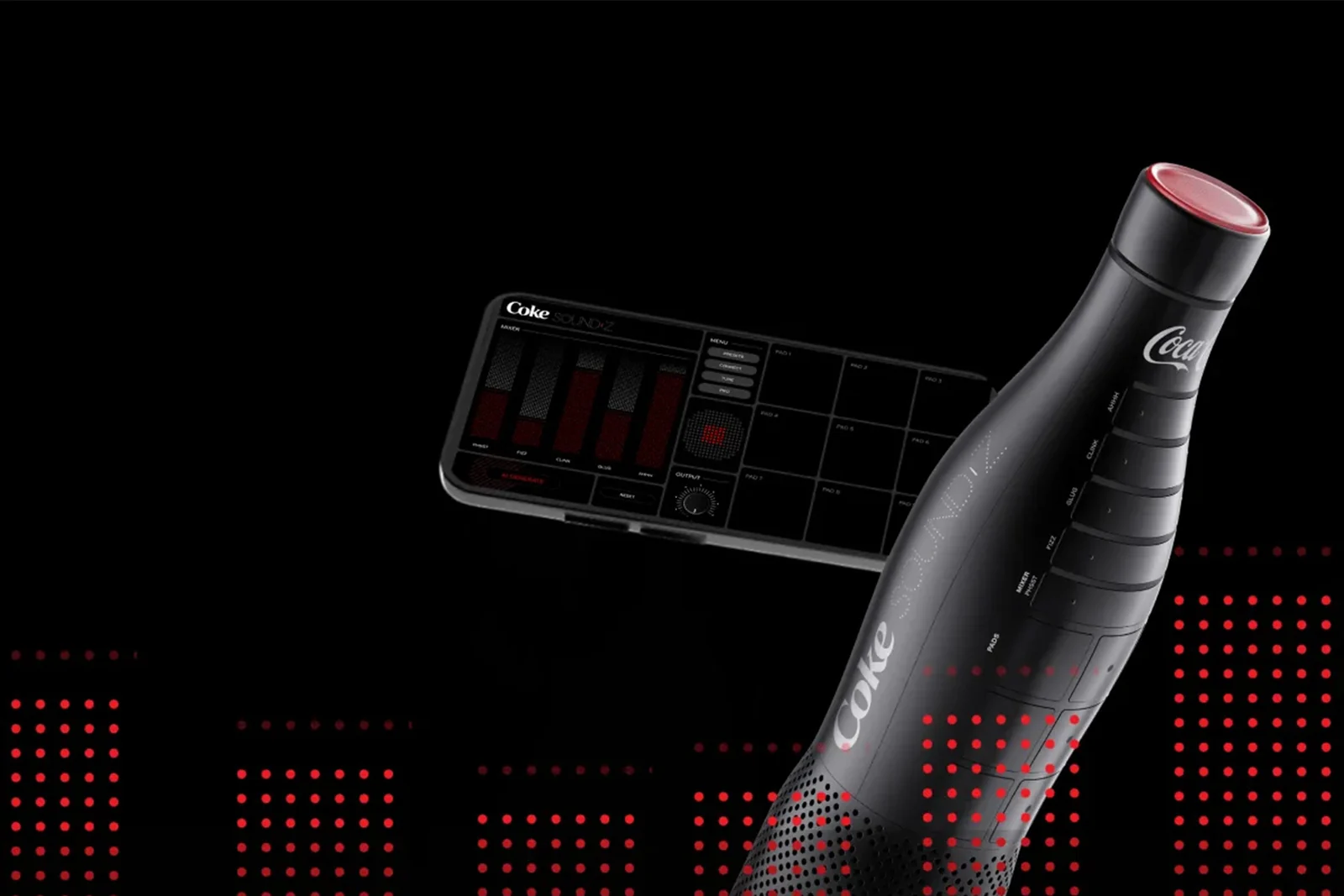
WPP's 2024 case describes an AI music experience built from Coca-Cola drinking sounds recorded with binaural microphones. It pairs a digital interface with a physical, bottle-shaped instrument. The creative account positions those familiar sounds as material people can arrange into music, rather than simply a soundtrack played underneath an advertisement.
Our reading: a constraint can be the brand
An open-ended music generator has a difficult advertising problem: almost any output could belong to almost anyone. Restricting the ingredients offers a more interesting route. A recognizable sound can operate as a creative boundary, encouraging variation without starting every composition from an empty brief.
The useful test is whether the source remains audible after transformation. Too literal, and the experience becomes a button that repeats a sound effect. Too abstract, and the connection disappears. The work between those extremes is a matter of taste: rhythm, contrast, space and the point at which a familiar noise begins to feel musical. The model cannot decide the brand's tolerance for losing recognition.
Give the player an intelligible choice
A musical interface should make a person feel that an action changed the result. For a team developing a similar experience, we would prioritize a few expressive controls over a large catalogue of presets. If every interaction yields an unrelated surprise, participation can feel like requesting a demonstration rather than playing an instrument.
That recommendation extends to the object itself. Physical gestures can teach a digital behavior, but they should be discoverable without a long explanation. The bottle shape is an immediate visual anchor in the source artwork. A successful interaction would make that familiarity useful, not merely decorative. This is our reading of the design opportunity, not a usability test we conducted.
Evidence boundary: pleasure is not proved by a case film
WPP connects the concept with uplifting responses to sound. The cited account does not supply enough independent evidence to establish a general emotional effect, and we make no such claim.
A more grounded evaluation would ask whether listeners recognize the brand without seeing its logo, whether players understand the controls and whether they want to make another composition. Separately document what users may save or share and how collaborators are credited. Those questions preserve the distinction between a compelling sensory proposition, a usable creative tool and a demonstrated commercial outcome.
Sources & limits
Agency production account; emotional-effect claims not independently established
- WPP Open X — The Coca-Cola Company's Coke SoundZ — source publication date not stated.
Send a correction with the passage and supporting source.