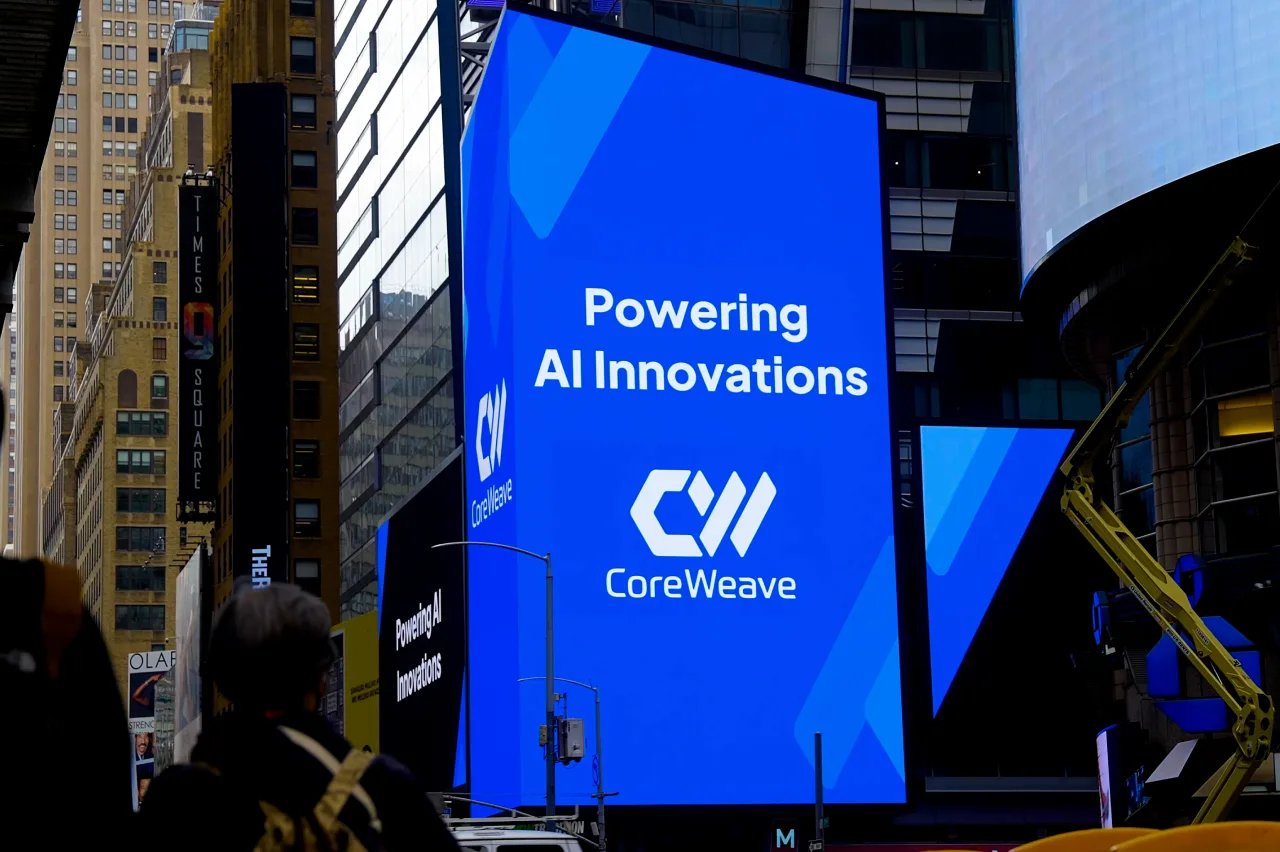
Reported execution: an AI company used AI as production infrastructure
AKQA describes a 360 campaign around CoreWeave’s $23 billion Nasdaq IPO. It says brand guidelines were reworked to inform models, a bespoke image library was made entirely with AI, and the work extended across a redesigned website, Times Square OOH and a national television campaign using AI-generated video and Veo 2.
The result is notable less for a single generated frame than for the attempt to turn a brand system into a repeatable production system. The visual language needed to survive a web landing page, TV, street-scale digital screens and a company-defining financial moment.
Our reading: the model brief is part of the identity brief
When a brand expects models to make assets, its guidelines cannot stop at a logo and palette. They need instructions a human and a generation workflow can both use: composition, subject matter, exclusions, tone and the evidence a visual is allowed to imply.
That can produce scale, but it does not eliminate art direction. The Times Square execution succeeds because the message is legible at a glance; a vast image library is useful only if selection remains disciplined.
Production lesson: distinguish the source library from the final claim
Keep a register of model outputs, prompt families, approved variants and the media placement each asset was built for. That makes corrections possible when an image overstates a product capability, resembles a protected work or fails a channel requirement.
For a technology brand, generated video needs extra review around demonstrations. Avoid letting an evocative synthetic scene read as literal product footage. The best governance is an ordinary production habit: label concepts, verify claims and give legal and subject experts a meaningful review point.
Evidence boundary: scale claims do not validate every asset
AKQA reports impressions, video views and clicks, and describes the campaign as part of CoreWeave’s IPO moment. Those are agency-reported outcomes, not an independent comparison of AI production against conventional production or evidence that every generated asset performed equally.
The enduring case is structural: a campaign used AI both as subject matter and as an organized making system. Its value depends on the human brand rules that narrowed a potentially limitless output space into recognizable public work.
Sources & limits
AKQA case study; reported reach figures are agency claims and its page gives year-level campaign context only.
- AKQA — CoreWeave: Unlocking AI’s full potential — source publication date not stated.
Send a correction with the passage and supporting source.