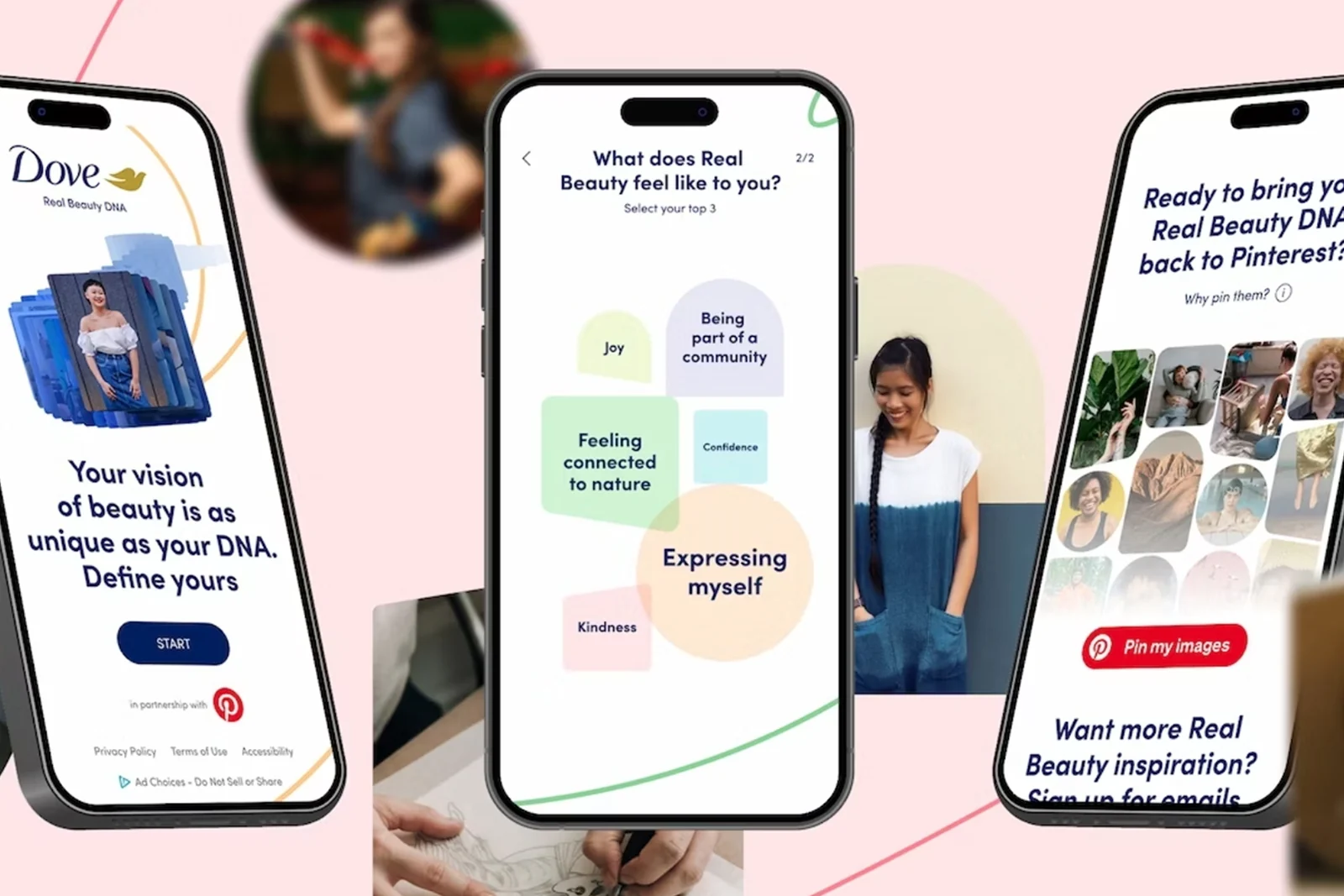
Reported experience: preferences become the creative material
WPP's case, labeled 2025, describes Real Beauty DNA as a Pinterest experience where people select images and inner qualities, then receive personalized content to share. Mindshare presents those actions as a way to influence subsequent recommendations. The exact first-launch date and the technical scope of that influence are not established by the page, so neither is inferred here.
Our reading: move the question upstream
A campaign about representation can produce a more varied set of pictures and stop there. This proposition is more interesting when it asks how pictures are selected for an individual in the first place. That shifts attention from an isolated creative asset to the recurring experience of seeing a feed.
The distinction also changes the meaning of participation. Choosing what beauty means should not become another exercise in having a machine pronounce a verdict about the chooser. Our editorial test would be whether the interface gives a person more agency over what they encounter. A flattering output is not the same thing as meaningful control.
A broader definition needs a specific promise
For a team borrowing the idea, we would insist on plain language about what a choice changes. Does it affect the next screen, a saved collection or recommendations over time? These are different promises. An experience can be worthwhile at any of those levels without implying that it has repaired an entire platform.
The same care applies to the word diversity. An evaluation should define which variation it is looking for and let participants describe relevance in their own terms. Counting more distinct images would not, by itself, demonstrate a better experience. Nor should a playful exercise become an inferred personal profile without the participant understanding that transition. These are proposed safeguards, not findings about the deployed system.
Evidence boundary: engagement is a different outcome
The agency reports media and brand results, but its account is not an independent audit of recommendation behavior. We do not treat the language of algorithm retraining as proof of a platform-wide technical change.
A stronger assessment would compare what participants see before and after the experience, explain the observation period and separate feed changes from brand response. It would also ask whether people notice and value any difference. This case belongs in the archive as an attempt to intervene in selection, not as evidence that the problem of beauty representation has been solved.
Sources & limits
Agency case study; algorithm-change and performance claims self-reported
- Mindshare and Dove — Real Beauty redefined for the AI era — source publication date not stated.
Send a correction with the passage and supporting source.