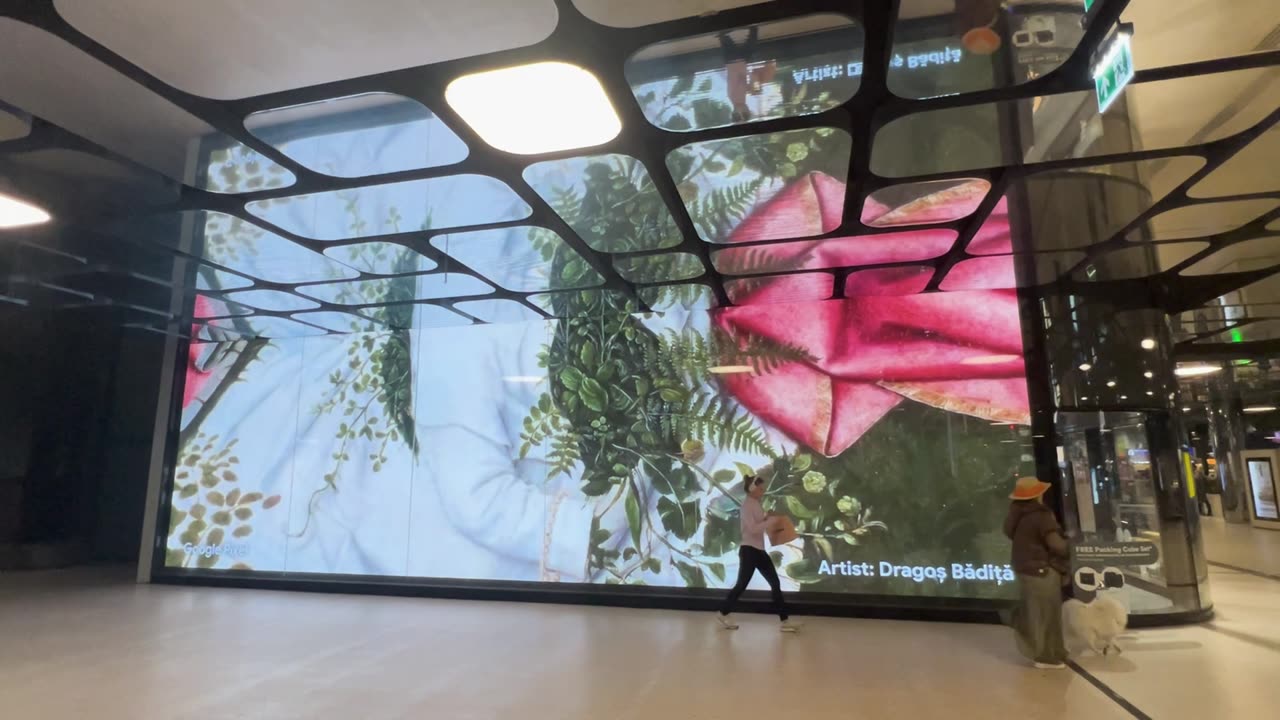
Reported execution: distribution became part of the prize
The partners asked entrants to choose a work from the Rijksmuseum collection and create a contemporary or futuristic remix using Google AI tools. The competition closed on 15 February 2026, and the winners were presented at the Rijksmuseum on 12 March.
The campaign extended beyond an online gallery. KPN’s terms promised a large-scale billboard showcase, while the partner case material describes five winning works appearing on roughly 3,000 digital billboards across the Netherlands. Artcrush reports 763 submissions and a later reach figure of about 7 million.
Our reading: an open call works harder when the reward is public
The strongest mechanic is not simply ‘make AI art for a chance to win.’ It connects a constrained creative prompt to a concrete distribution promise: a selected work can leave the platform, enter a city’s media layer and return to a cultural institution.
That makes the campaign legible to both artists and audiences. The phone-based act of remixing becomes a route into a shared public program rather than a disposable content prompt.
Production lesson: specify the source, tool and disclosure path
A participatory AI brief needs more than a theme. The terms specify the collection source, permitted Google tools and disclosure expectations, which gives the judging process a way to assess both creative result and use of the technology.
For brands borrowing cultural material, that structure also helps with provenance. Participants know what they may remix, the institution can explain the relationship to the original, and the public can distinguish a generated reinterpretation from the museum’s own work.
Evidence boundary: screen totals and reach are not one measurement
The public terms reference more than 2,810 billboards, while partner case pages round the activation to 3,000 screens and report reach and engagement figures. This record keeps those values approximate instead of presenting them as a single independently reconciled number.
The sources establish a real open call, exhibition and DOOH rollout. They do not provide a controlled measure of incremental brand preference or isolate Gemini’s contribution from the cultural partnership and media distribution.
Sources & limits
KPN’s competition page, a Google-distributed release and Artcrush’s case summary document the activation; submission, screen-count, reach and engagement figures are partner-reported and the public sources vary slightly on the exact screen total.
- KPN — Maak AI-kunst met Google Gemini — source publication date not stated.
- Emerce — Tot leven gebracht meesterwerk wint AI kunst competitie Google — 16 March 2026.
- Artcrush — For Brands — source publication date not stated.
- Google / KPN / Artcrush / Rijksmuseum — Competition terms — source publication date not stated.
Send a correction with the passage and supporting source.