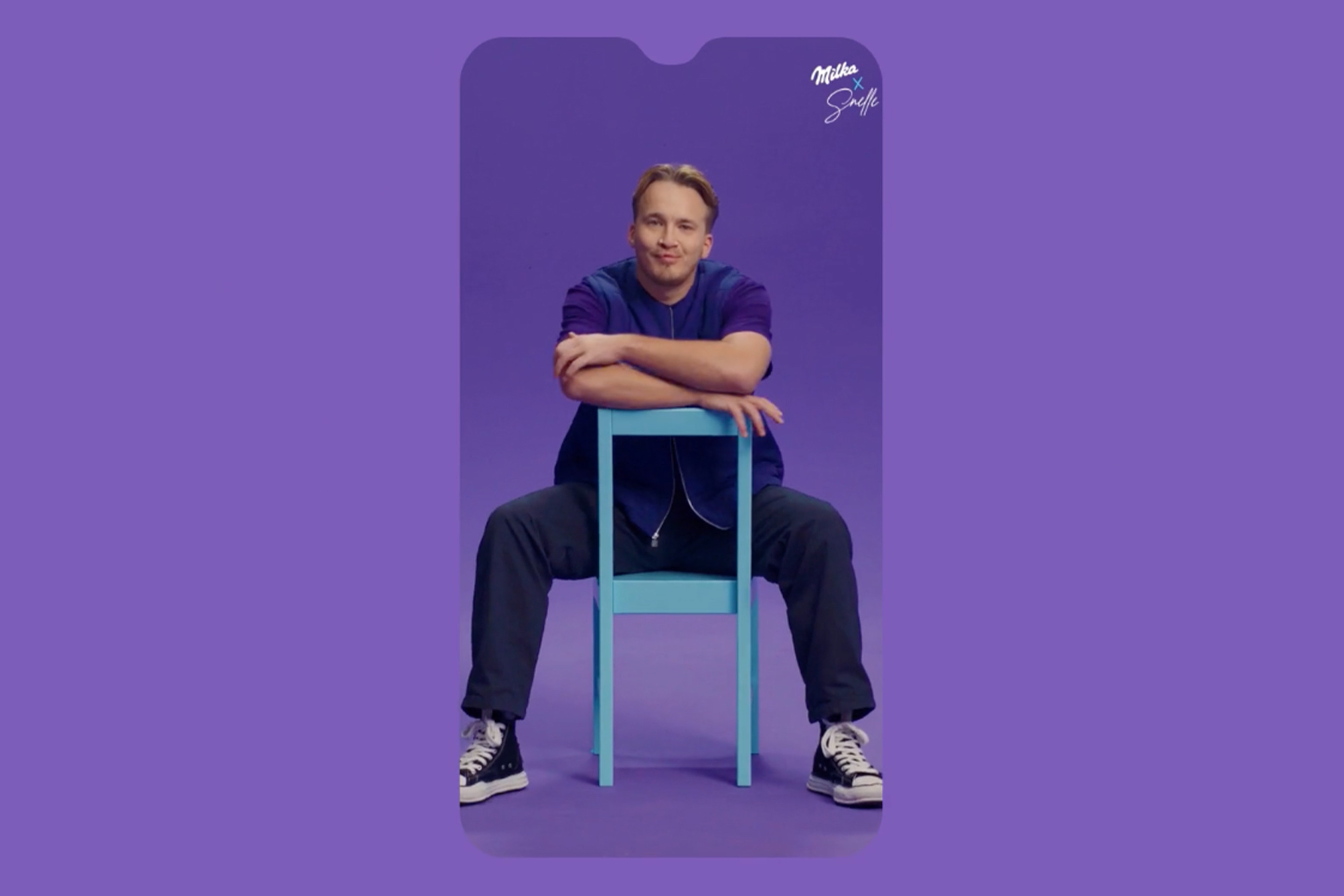
Reported execution: a message became a rap video
WPP’s 2024 case describes a Netherlands experience where people supplied a personal message and received a rap attributed to Dutch singer-songwriter Snelle. It names OpenAI for lyric generation, Uberduck for voice cloning and HeyGen for a lip-synced video.
The campaign’s phrase is ‘If you can’t say it, sing it.’ That positions the output as an aid to emotional expression rather than a generic celebrity novelty. The format turns a small message into a compact shareable performance with Milka’s tenderness proposition attached.
Our reading: intimacy is a higher bar than novelty
A personal song is memorable only when it sounds addressed to someone, not when it merely inserts a name. The creative risk is that a familiar voice makes templated language feel more intimate than it is. Specificity, tone and a graceful failure state matter more than the volume of possible outputs.
The known performer is central to the promise, so the work should make that relationship unambiguous. An authorized, bounded creative role is materially different from an unlicensed soundalike presented as a surprise.
Production lesson: author style needs input and output controls
Define which user inputs are accepted, what the lyric system must refuse and what topics cannot be performed in the artist’s voice. Review examples from the exact language and cultural context; a syntactically fluent rap can still be inappropriate, clichéd or accidentally defamatory.
Users also need an intelligible choice about sharing. Treat a message to a loved one as potentially sensitive, minimize retention and avoid making a public post the default. The campaign can be warm without converting private feeling into forced social proof.
Evidence boundary: the case does not show quality across all messages
The WPP record establishes the stated three-engine workflow and campaign availability. It does not independently test lyric quality, voice fidelity, consent terms or the experience of people whose prompts were rejected.
The reusable lesson is not that celebrity cloning automatically personalizes a brand. It is that a tightly framed performer relationship can give an input-output tool cultural meaning, provided permission, safety and user expectations are treated as part of the creative.
Sources & limits
WPP agency case study; technology roles and national availability are maker-reported.
- WPP — Milka’s Let Snelle Sing It For You — source publication date not stated.
Send a correction with the passage and supporting source.