Reported execution: generated explorers were an opening move
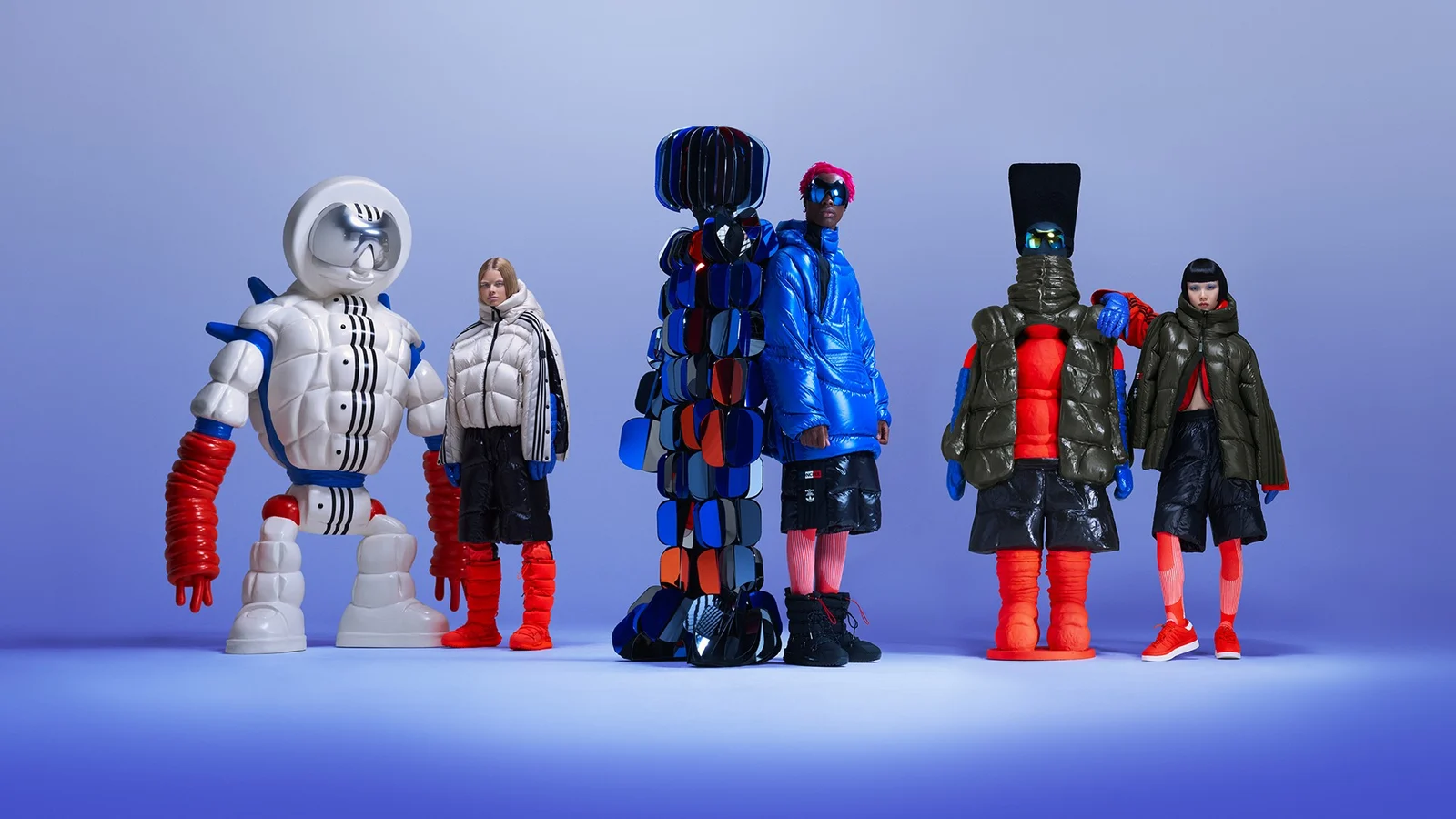
adidas announced Moncler x adidas Originals' The Art of Explorers on October 2, 2023. Its release says the campaign first represented the explorer figure through AI-generated adventurers, then through unique mixed-media sculptures. The collection positioned a mountain-to-city journey as the shared territory between the two brands, while the campaign translated that premise into characters rather than a conventional lookbook alone.
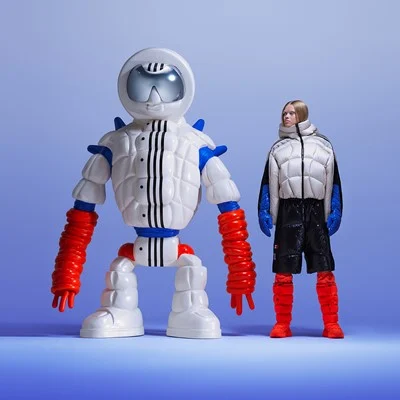
The source identifies a substantial physical response to the generated figures. Gary Card, Ibby Njoya and Kate Tabor made sculptures; real-life explorers wore looks styled by Ai Kamoshita, with hair and make-up credits and photography by Hanna Moon. An immersive platform added sound, video and 3D animation. AI therefore appears as one visual register in a wider collaboration, not as a claim that the entire campaign had been generated without makers.
Our reading: the strongest synthetic image can be a provocation for material craft
The campaign's more interesting move is the handoff from a digitally strange explorer to an object with weight, texture and individual authorship. The generated figure gives collaborators an intentionally elastic prompt; sculpture, styling and photography make decisions that can be examined in the real world. That sequence avoids treating the first synthetic image as the final creative answer.
It also gives the collaboration a productive tension. Fashion is full of surfaces, but garments must be worn, lit, constructed and photographed. By allowing the virtual archetype to meet visible human crafts, the work keeps the idea from collapsing into generic futurism. The artefacts supply the specificity that an abstract AI explorer alone would lack.
Production lesson: use generated references as a brief, then credit the transformation
When generative work supplies a starting language, retain the prompt references and explain what they are for: mood, silhouette, palette, spatial logic or character—not a substitute for a maker's contribution. Invite each collaborator to interpret rather than merely replicate the synthetic reference. This produces a clearer chain of authorship and prevents a tool output from becoming an unexamined aesthetic instruction.
The final release should name the people who transformed the idea and distinguish rendered, sculpted, photographed and animated assets. That has practical value as well as ethical value. It tells production teams which files can be altered, which are one-off artworks, and which visual claims belong to a real garment or performance.
Evidence boundary: launch credits do not expose the AI's provenance
The adidas page supports the launch date, the stated ordering of AI-generated figures and physical sculptures, and the maker credits. It does not identify the AI system, training data, prompts, image-selection process, image rights, or the reception and sales effect of the campaign. No broad conclusion about the sustainability or efficiency of the workflow is warranted from this source.
A fuller account would publish the generative-art direction, permissions and revision history alongside the physical commissions, then test which elements audiences actually encountered. The useful documented principle is simple: AI imagery can open a creative system, but the campaign becomes richer and more accountable when subsequent human material work is visible and credited.
Look closer / 1 source visuals
Inside the work.
Open a frame to inspect the details. Each caption links to its original source.
Sources & limits
adidas' release documents the launch, credited makers and stated campaign sequence. It does not disclose the generative system, its inputs, or independent audience and commercial outcomes.
- adidas News — Moncler X adidas Originals — 2 October 2023.
Send a correction with the passage and supporting source.