Reported execution: the audience entered the premise
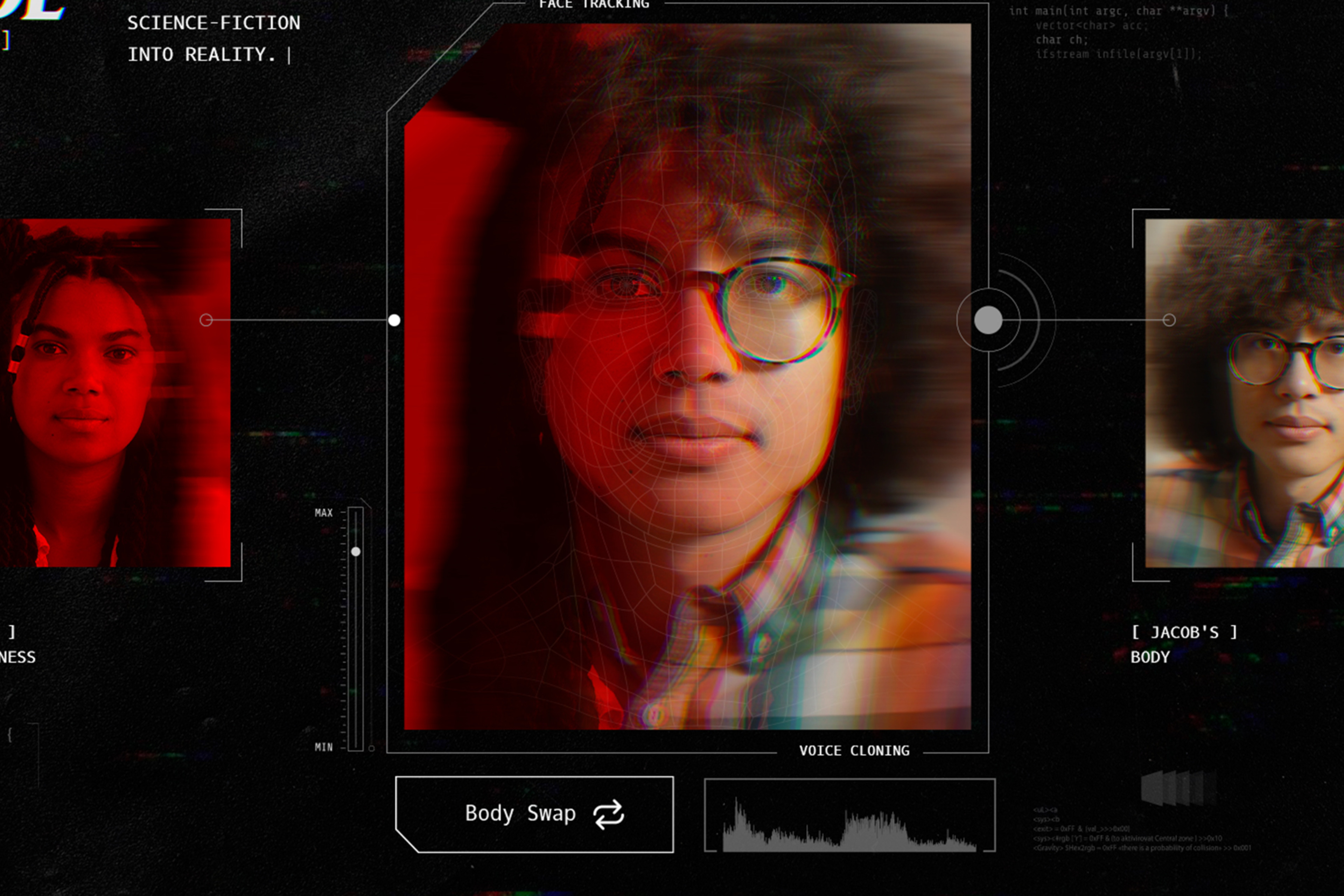
WPP says AKQA built a digital ‘body-swapping’ machine to promote Netflix’s It’s What’s Inside. Up to six friends could mimic one another’s face and voice from the shoulders up, then take turns speaking and guessing who was who. The case identifies machine learning, face modelling and AI-driven voice cloning as the enabling techniques.
The account says each session was private and voices and images were deleted at the end. The promotion therefore used its most sensitive inputs for a bounded social game rather than asking participants to publish an enduring synthetic identity.
Our reading: the mechanic carries the story better than a plot summary
The film’s unsettling interest in identity becomes a party-game rule: the person in front of you is not necessarily the person speaking. That is a more faithful promotional translation than merely adding a face filter to generic marketing material.
The tension depends on participants understanding the trick. Clear framing can preserve the uncanny effect without making people wonder whether their likeness will wander outside the game. In this kind of activation, disclosure is part of the drama’s safe boundary.
Production lesson: ephemeral should be designed, not asserted
If a campaign promises deletion, document the operational meaning: what files are created, when they are removed, which vendors process them, and what happens when a session fails. Consent should be collective, because one participant’s output visibly incorporates others.
Keep the impersonation range narrow enough that users do not mistake a game for a tool to make statements in somebody else’s voice. Visible session states, simple withdrawal controls and no default social export are practical ways to make a private premise credible.
Evidence boundary: private-play claims need implementation evidence
WPP verifies that the campaign positioned deletion and privacy as part of the experience. It does not supply a technical audit of retention, consent comprehension or misuse prevention. This record therefore does not treat ‘private’ as independently certified.
The campaign remains a useful creative pattern: interactive ML can promote fiction by letting people test its rule set. Its success should be evaluated through voluntary completion and clear understanding, not merely through the novelty of swapped faces.
Sources & limits
WPP agency case study; mechanism and deletion claim are maker-reported.
- WPP — AKQA: Netflix’s It’s What’s Inside — source publication date not stated.
Send a correction with the passage and supporting source.