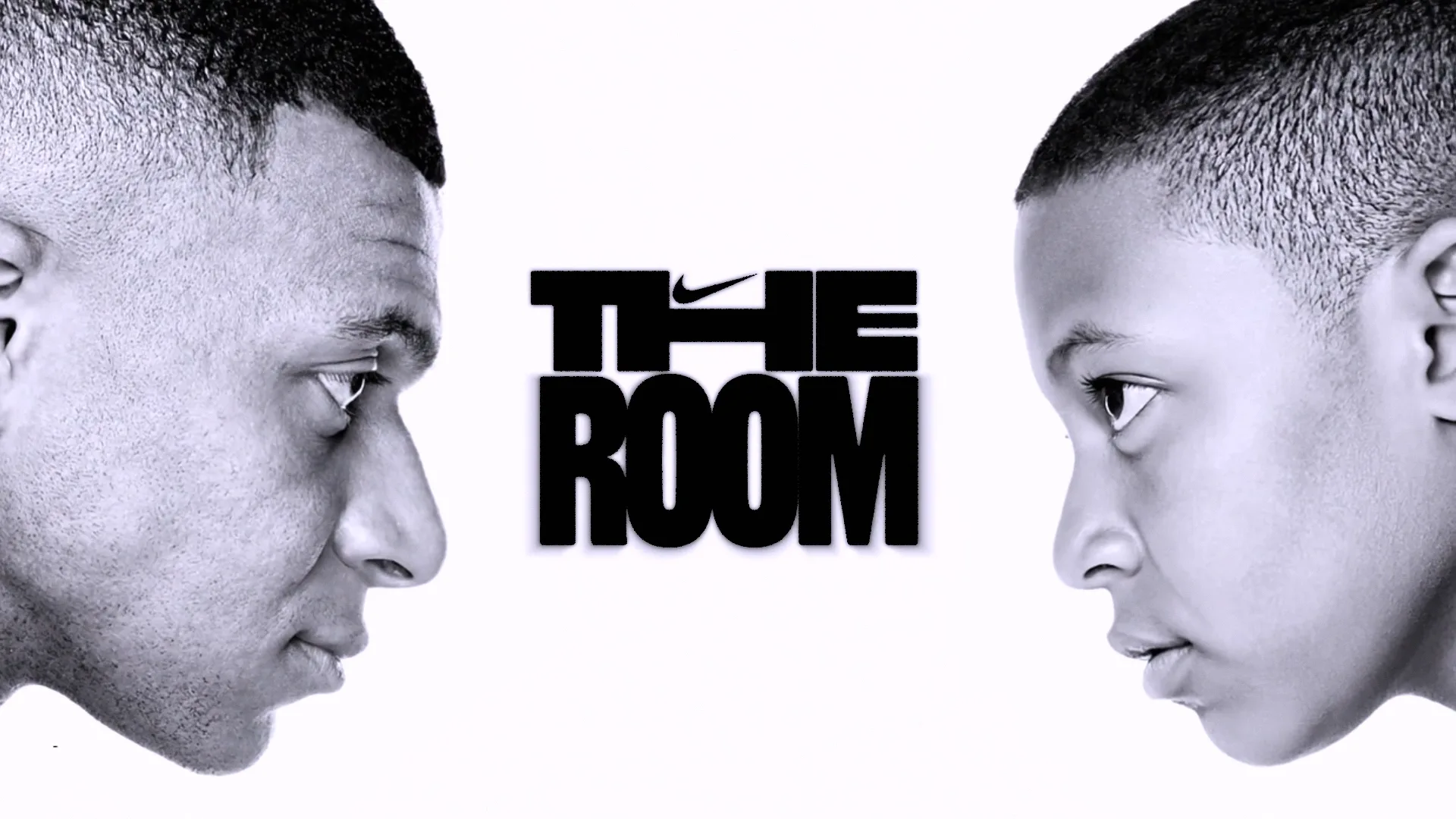
Reported execution: an AI child coached a physical launch
AKQA says The Room reimagined Mbappé’s childhood bedroom as an immersive setting for Nike’s dream-inspired Mercurial boots. Visitors faced trials drawn from the player’s story and were coached by an AI version of a young Mbappé before unlocking the product. The agency also says AI supported content production and custom content tailored to participants’ dreams.
The campaign therefore used AI inside the experience, not only in the materials used to advertise it. The generated persona linked a personal origin story to a live sequence of prompts, objects and responses in the room.
Our reading: a likeness can carry feeling without carrying authority
A young digital Mbappé is powerful because it compresses biography, aspiration and interaction into one character. It needs careful framing: a participant may understand the figure as a story device while still experiencing it as a personal endorsement or a direct exchange with the athlete.
The best creative constraint is to make the character’s job narrow. It can motivate, narrate and guide a challenge without pretending to offer training expertise, private access or an unscripted statement from a real person.
Production lesson: consent covers more than a face model
A campaign character based on a living athlete needs clear approvals for likeness, voice, story elements, localized uses and the ways participants’ inputs shape custom content. Maintain an approved-response boundary and a human process for material that falls outside it.
Physical immersion adds practical constraints: accessibility, queues, staff training and ways to participate without a personal-data exchange. A technical failure should not strand the event; the non-AI experience still needs to make narrative sense.
Evidence boundary: agency reach figures are not proof of belief
AKQA and WPP report view and engagement figures for the launch. Those claims can describe campaign distribution, but they do not independently show that the AI guide changed confidence, purchase intent or sport participation.
The well-supported fact is the execution: an AI likeness was used as a live guide in a Nike product-launch experience. The broader self-belief narrative is an interpretation the campaign invited, not an outcome the cited sources independently establish.
Sources & limits
AKQA and WPP case studies; the sources provide year-level context and agency-reported reach figures, not an independent audience study.
- AKQA — Nike x Kylian Mbappé: The Room — source publication date not stated.
- WPP — The Room: Nike and AKQA — source publication date not stated.
Send a correction with the passage and supporting source.