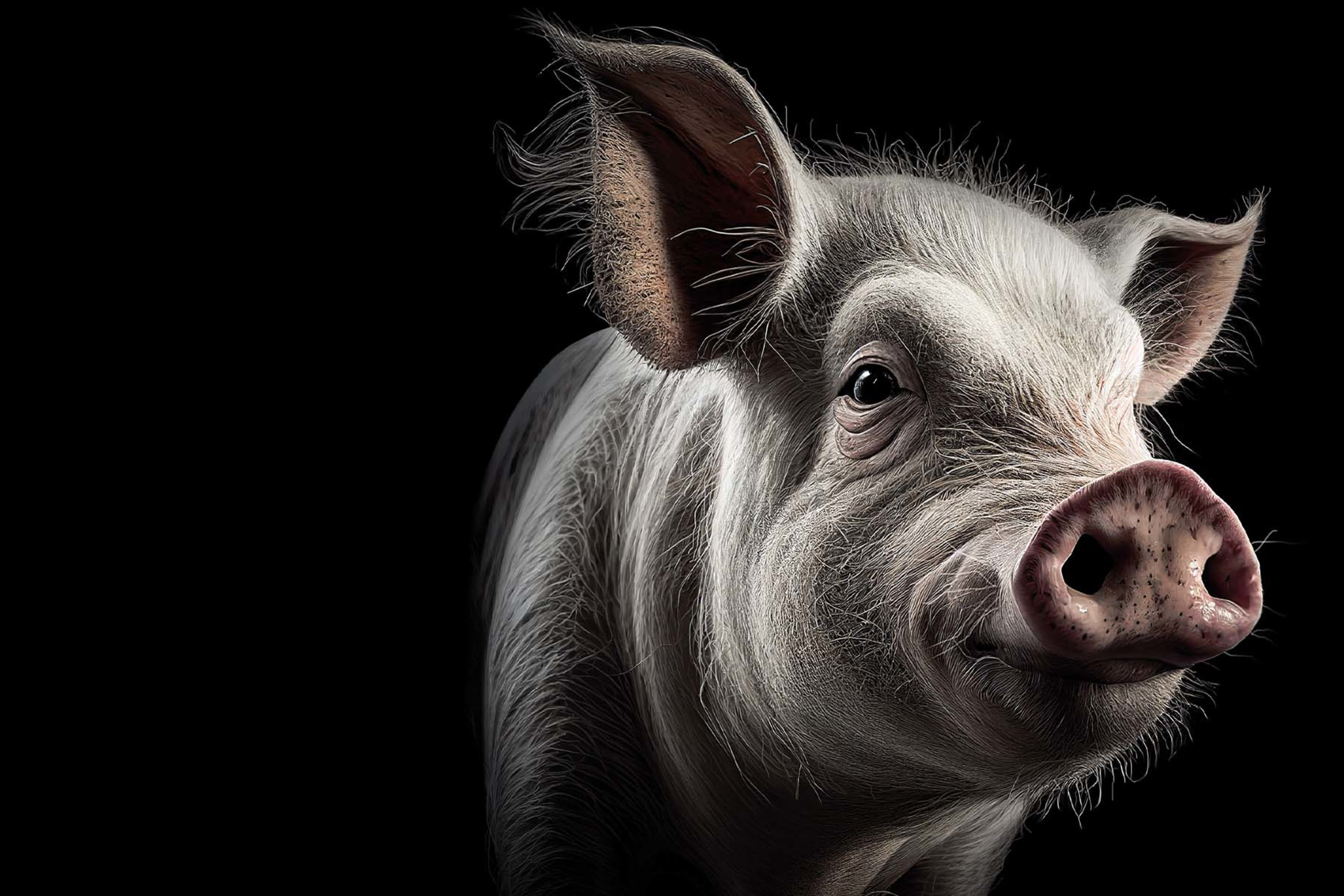
Reported execution: a lifespan appeared as a face
WPP says NotCo and AKQA Bloom created photographic portraits of elderly cows, pigs and chickens using Midjourney and Stable Diffusion. The campaign linked those images to a simple observation: many people have not seen old farm animals because industrial food systems cut their lives short.
The case says the portraits ran in social, billboards and print across the US, Chile, Brazil, Canada, Mexico and Argentina. NotCo’s plant-based proposition is therefore not separate from the visual device; the generated image supplies an imagined counterfactual to the food system the brand says it wants to replace.
Our reading: synthetic realism is strongest when it declares its fiction
The portrait is emotionally persuasive because it resembles documentary animal photography, yet it represents an animal that did not exist. That tension can sharpen the idea, but only if the campaign clearly labels the construction. Otherwise a hypothetical image risks borrowing the authority of evidence it does not possess.
The useful question is not whether a generator can make a convincing old pig. It is whether the image makes an absent life imaginable without erasing the facts that would make the argument accountable.
Production lesson: separate biological claims from visual invention
A campaign making lifespan claims should maintain sources for those numbers apart from the image workflow. Treat the portrait as illustration; do not let its apparent realism substantiate a statistic. Captions, landing pages and media copy should make the relationship clear.
Human art direction is particularly important when depictions concern animals, farming and ethical harm. Review for accidental anthropomorphism, misleading health cues and stereotypes that turn an animal into a prop instead of a subject of the argument.
Evidence boundary: impressions do not establish dietary change
WPP reports the markets and more than 430 million media impressions. Those are distribution claims from the agency record, not evidence that viewers changed consumption or agreed with NotCo’s framing.
The case earns a place as a documented generative-creative campaign because the portraits were the paid-media idea, not incidental concept art. Its broader effectiveness should be assessed separately through comprehension, credibility and behavior measures.
Sources & limits
WPP agency case study; distribution and impression results are agency-reported.
- WPP — AKQA: NotCo’s Natural Life Expectancy — source publication date not stated.
Send a correction with the passage and supporting source.