Reported execution: a coach for the fan’s embarrassing moment
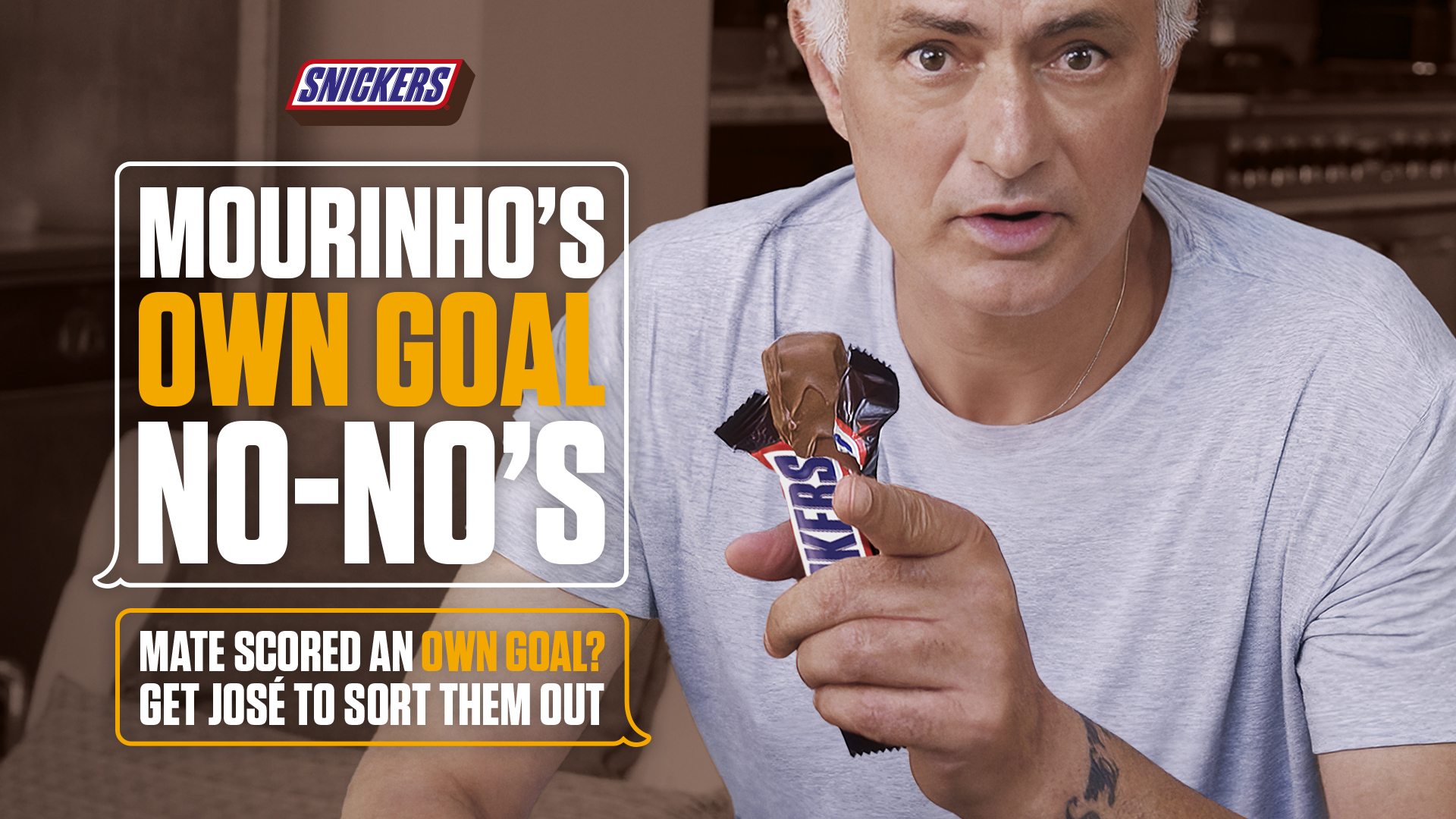
Mars announced the Snickers experience on June 25, 2024, during the summer football period. It invited fans to submit their own ‘own goals’ and receive a personalized video from an authorized AI clone of José Mourinho. The release names T&Pm and Helo as partners and identifies ElevenLabs, Synclabs and OpenAI GPT-4.0 within the production stack.
Mars describes eight stages in the pipeline, including safeguards intended to keep output entertaining and brand-safe. The point was not merely to place an existing film in front of football audiences. Each fan’s confession supplied the material for a new response, framed in the brand’s familiar corrective voice.
Our reading: permission is a creative material, not paperwork after the fact
The campaign works because the famous person is not presented as an accidental imitation. Mars explicitly calls the clone authorized, and the artwork is part of an official Snickers activation. That changes the ethical and narrative frame: Mourinho’s persona is the invited mechanism, not an uncredited visual shortcut.
Even authorized likeness use has a tonal limit. The recognizable promise is the manager’s blunt, theatrical coaching, but an individual submission may contain more context than the brand should turn into a joke. A successful personalization system has to distinguish a usable self-own from a sensitive disclosure.
Production lesson: make the escalation path part of the experience
A staged pipeline is meaningful only if it has decision points. For comparable work, document what is screened before generation, which categories are rejected, how a failure is logged, and who can stop distribution. Consent should cover the performer’s likeness, but also the fan’s submitted story and the ways a resulting clip can be replayed or shared.
The output needs recognizable guardrails too. Limit the voice, claims and subject range before prompting; preserve a record of the input and response; and give users a clear report route. These practices reduce the temptation to make a synthetic performer appear omniscient or personally informed beyond the submitted material.
Evidence boundary: novelty and safety claims need different tests
The Mars account verifies the advertised mechanism and calls the architecture brand-safe. It is not an external assessment of model behavior, the completeness of moderation or audience response. The later trade account supplies useful context but likewise rests on campaign reporting for its description of the work.
A rigorous review would test false positives, harmful prompt handling, consistency across languages and whether people understood the clip as an authorized synthetic performance. The archive value lies in a documented choice to make authorization and multi-stage controls explicit, not in an untested assumption that a celebrity clone is safe by default.
Sources & limits
Contemporaneous Mars release; production architecture is first-party reporting and does not independently audit each generated response.
- Mars — SNICKERS hires AI-powered José Mourinho — 25 June 2024.
- The Drum — Snickers: Mourinho’s Own Goal No No’s — 5 June 2025.
Send a correction with the passage and supporting source.