Reported workflow: from scent notes to destinations
Think with Google's April 2025 account describes WITHIN using Gemini to explore personas and destinations from audience research and fragrance notes. The team applied practical travel criteria, used Imagen 3 for imagery and added motion production. A January sweepstakes preceded the product's February launch. The source is written by a Google marketing executive and presents participant-reported results.
Our reading: give the invisible a visual vocabulary
Fragrance poses a useful creative constraint for a screen: the audience cannot smell what is being sold. A landscape can suggest atmosphere, temperature or texture without pretending to reproduce the sensory experience. That leaves room for distinctive art direction, provided the metaphor remains attached to a clear product.
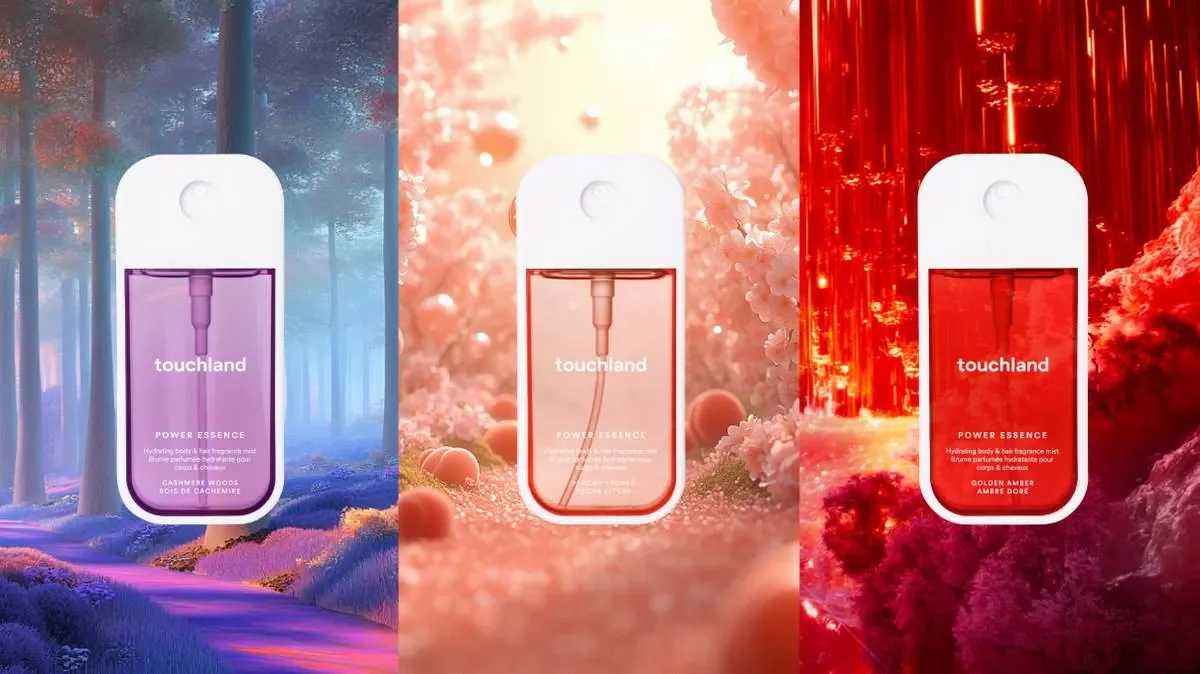
The source artwork shows why the composition matters. The bottles remain stable while their surrounding worlds change. Our reading is that the repetition does useful work: it makes the range feel related, and it gives the eye somewhere to return. The spectacle would be less persuasive if the product itself became just another unstable element.
A generated persona is a hypothesis, not a respondent
For a team adapting this method, the important research boundary comes before image production. A model can propose associations to investigate; it cannot turn those associations into evidence that a customer actually feels that way. Keep the underlying research visible and label speculative extensions so a plausible story does not acquire the status of an interview.
Travel introduces an equally practical discipline. The prize must still be understandable and deliverable when the visual world is fantastical. We would review destination descriptions separately from mood imagery and check that the creative does not imply an experience the offer cannot provide. These are recommendations for the brief, not claims that we audited the sweepstakes.
Evidence boundary: prize appeal and product appeal can diverge
The article reports entries and media outcomes, but does not isolate the effect of generative production. An attractive prize, the distribution plan and the product launch could each contribute to response.
That is why our proposed evaluation would distinguish entering from considering a fragrance, and considering from buying. It should also track how many generated options became approved assets, including finishing work. The lesson is not that a model discovered the audience. It is that a carefully constrained visual metaphor can carry an offer across formats, while research and fulfillment remain accountable human decisions.
Sources & limits
Technology-provider case study; campaign results reported by participants
- The Impossible Ad: Touchland and Within's sensory sweepstakes — 29 April 2025.
Send a correction with the passage and supporting source.