Reported execution: a phrase became a redeemable moment
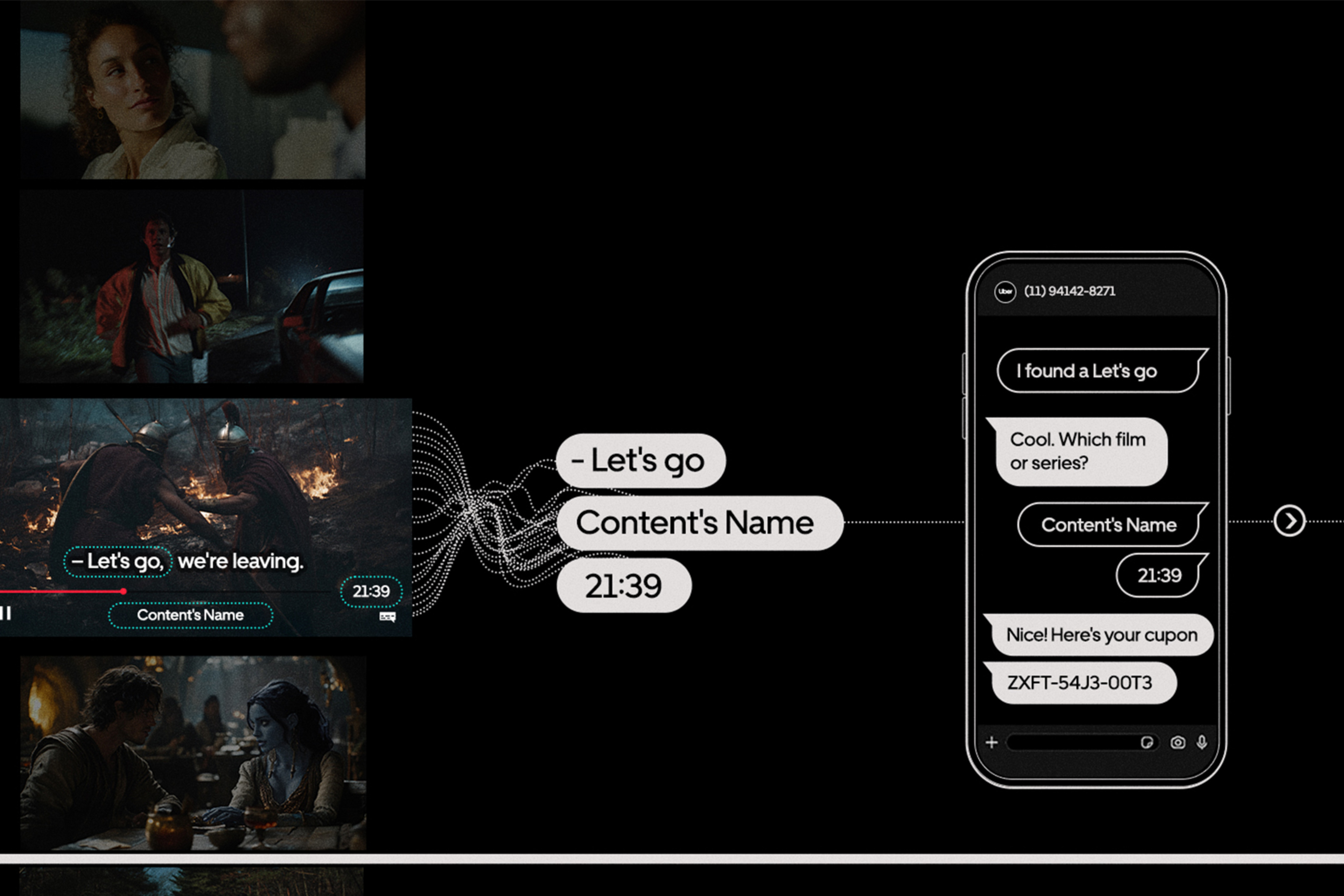
WPP says Uber and AKQA built Watch It to Ride around the Brazilian prompt ‘bora’, or ‘let’s go’. AI scanned thousands of titles and platforms, mapped selected occurrences down to the second and fed an automated detection plugin. When a viewer encountered a marked moment, the campaign could connect that cue to a WhatsApp interaction and a ride voucher.
This was not simply contextual media buying. The claimed execution turned a recognizable line in entertainment into a product-use invitation. WPP also describes a human review layer, an important detail where a phrase can change meaning with scene, speaker or subtitle treatment.
Our reading: indexing is only useful when the handoff is graceful
The interesting unit is not the model’s match but the transition from a passive screen to a service decision. A cue that arrives too late, feels forced or lands in the wrong dramatic context can make the brand feel as if it is interrupting the programme rather than joining a cultural habit.
A narrowly defined phrase is a sensible constraint. It gives the classifier a comprehensible target and gives creative teams one consistent action to explain. The human check protects against a technically correct timestamp that is emotionally wrong.
Production lesson: rights, context and redemption need one owner
A content-indexing activation needs a clear record of which titles, clips and platforms are in scope, plus an escalation route for disputed matches. The campaign page does not describe those licensing or platform arrangements, so they should not be assumed from the mechanic alone.
The offer flow also needs routine operational scrutiny: voucher eligibility, bot handoff, regional availability and a fallback when a viewer cannot complete the conversation. These are product decisions as much as media decisions.
Evidence boundary: a documented mechanism is not a sales study
WPP documents the AI scan, timestamping, review and WhatsApp redemption concept, which is enough to establish an algorithmic activation. Its public case page does not provide independent conversion, incrementality or customer-experience evidence.
The case belongs here because detection changed the moment at which a real service offer appeared. Whether that moment generated durable preference would need campaign-level redemption and control-group evidence that is not published on the cited page.
Sources & limits
WPP agency case study; its year-level page documents the mechanism but gives no independently auditable performance data.
- WPP — AKQA: Uber’s Watch It to Ride — source publication date not stated.
Send a correction with the passage and supporting source.