A sheet of compelling images can make a review feel productive before anyone has made a decision. Nike’s account of A.I.R. is useful because the work continues beyond that sheet. The team has to turn an appealing form into something that answers an athlete’s particular needs.
A prototype has a different job
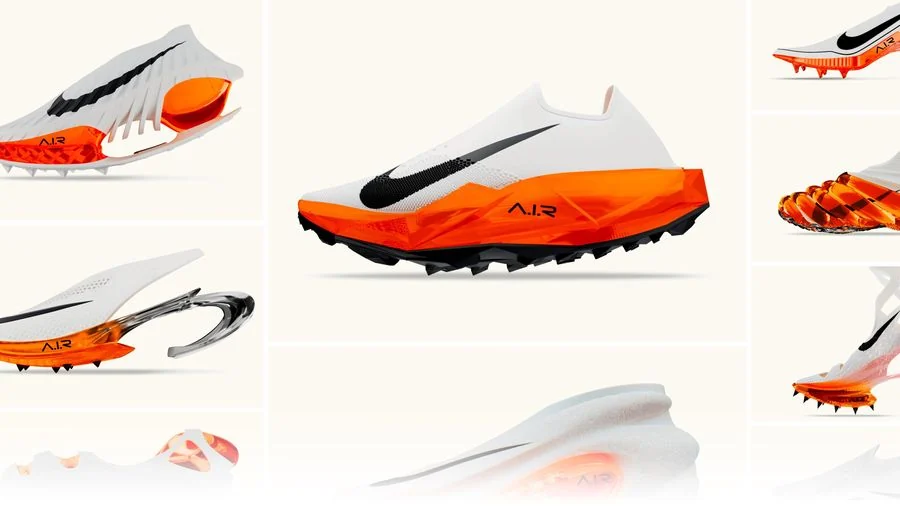
Nike describes designers working with 13 athletes, using generative imagery among the inputs for footwear prototypes. Listening sessions preceded image generation; sketches, computational tools, physical fabrication, and feedback followed. The team also describes having to work against a recurring fluid aesthetic in the generated concepts. Nike’s production account is the source for that sequence.
One revealing detail concerns Eliud Kipchoge’s feedback on a heel shape. Nike reports that he spotted a practical problem: material from unpaved trails could collect in it. The attractive outline had to answer to the setting in which the shoe would be used.
What this changes in a creative review
For an advertising team, the parallel is the distance between a striking treatment and a useful campaign. A concept can be visually coherent while showing the product incorrectly, missing an audience convention, or requiring an impossible approval process. Early images conceal those problems when the review is framed only around preference.
Ask reviewers to attach a reason to each choice. “Keep” should refer to a job the image performs: making the product recognizable, establishing a believable context, or expressing a specific tension. “Reject” should identify the failed condition. This gives the next iteration more direction than a pile of favorites.
Editorial reading: A rejected image can be useful evidence. It shows where an attractive visual assumption stopped matching the work.
Bring back the particulars
A brief gains force from details that cannot be swapped into any other campaign. Bring the real product dimensions, the way it is handled, the material it uses, and the conditions in which it appears into the discussion. Talk to the people who know those details. An image review alone is a poor substitute for that knowledge.
Look across the proposed routes as a set. Repeated lighting, surfaces, gestures, or compositions may indicate that the routes are less different than they first appear. Name the repetition. Then introduce a specific reference or constraint that changes the decision, rather than merely requesting more options.
Keep a record of the turn
A practical review log can be short: the proposed route, the reason it was considered, the condition it failed, and the next change to make. Include who has the knowledge to assess that change. The log becomes particularly useful when an appealing rejected route returns later, stripped of its original caveat.
Measure progress by how much uncertainty the team resolves. Faster generation may help exploration; it can also increase the volume waiting for review. Record time spent selecting, revising, and approving alongside time spent generating. The useful output is an approved direction with a reason someone can explain.
This account offers a way to think about craft. The designer’s judgment becomes visible at the moment an image encounters a particular person, object, or place and has to change. That is a productive place to look when a creative process feels busy but directionless.
Sources & limits
Nike’s account is the primary source and reflects its own view of the process. This is a reading of a design project, not a footwear test or proof of advertising performance. The review method is an editorial proposal.
- Nike — Creating the Unreal — 11 April 2024; athlete interviews, design iteration, and prototypes.
Found an error? Send a correction with the passage and supporting source.