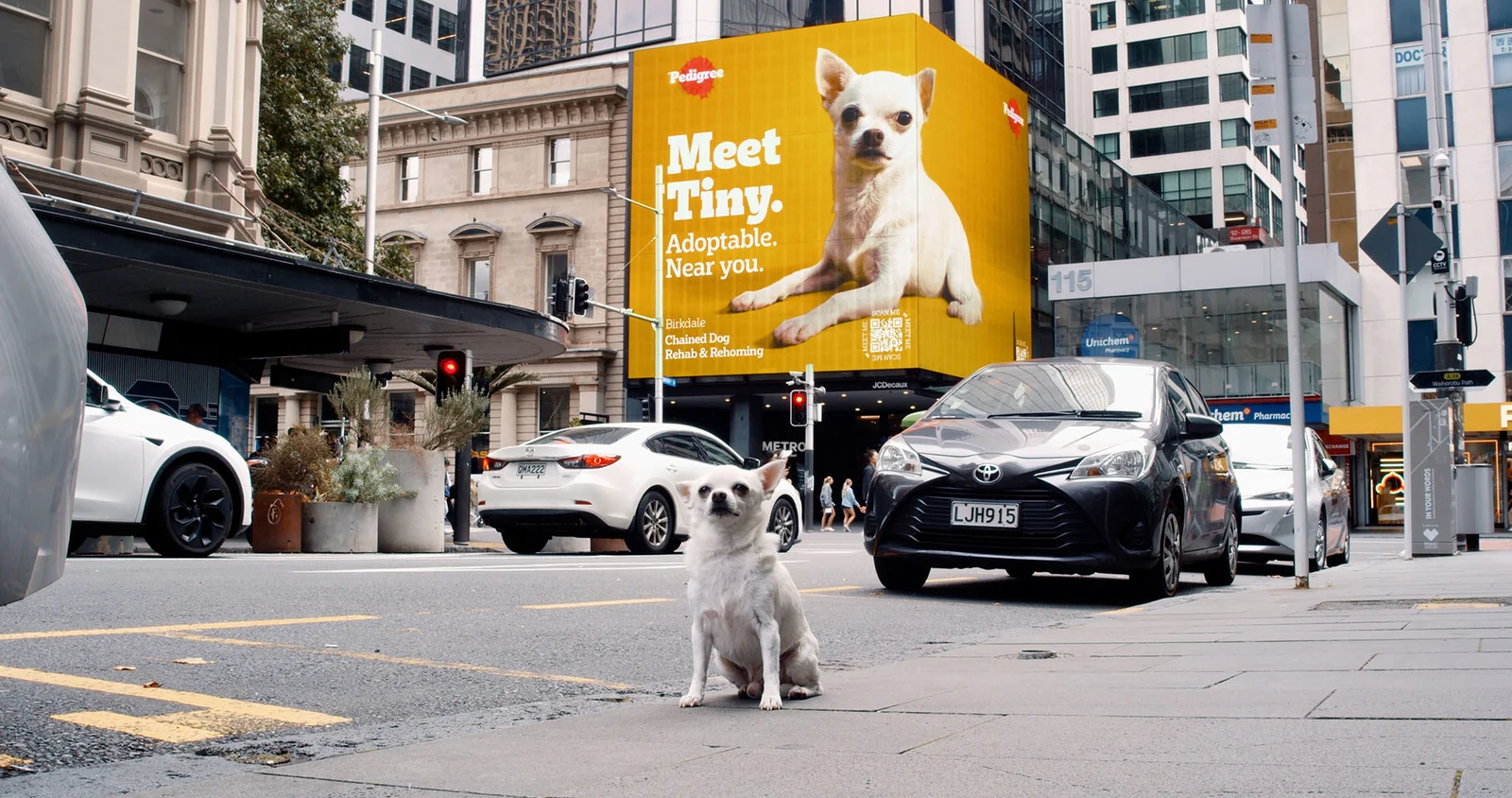
Reported execution: a specific dog, not a stock dog
Nexus describes a system that maps a shelter dog's features to a digital skeleton and produces advertising-ready images from ordinary photographs. Its case account says placements respond to location and change when an animal is adopted. Mars also identifies Adoptable as a 2024 campaign. These accounts establish the intended connection between creative production and shelter availability; they are not independent audits of every placement.
Our reading: the useful part is the listing
The creative proposition is stronger when read as an answer to a distribution problem. A shelter can have an animal worth meeting without having a campaign photographer available. Turning an existing photograph into a usable advertisement could bring that animal into a media plan that would otherwise show a generic dog.
But the photograph must remain a reference, not raw material for an idealized replacement. A better pose is not permission to alter identifying markings or imply a temperament. The advertiser is asking someone to act on a particular subject. Fidelity is therefore part of the offer, not merely a production quality check.
What a production brief should protect
For a team borrowing this approach, we would put a human approval step between image generation and publication. Compare the result with the shelter's reference, confirm the listing destination and assign responsibility for withdrawing it. An attractive image paired with an unavailable animal would undermine the very usefulness that makes the idea persuasive.
The same discipline should extend to geographic relevance. Nearby is a promise to the reader, so define what it means before selecting placements. Keep an ordinary photograph available on the destination page. The campaign image can earn attention while the underlying record helps a prospective adopter make an informed next move.
Evidence boundary: count homes, not just pictures
Nexus reports early adoption and shelter-traffic gains. We treat those as producer-reported outcomes, not proof that image generation alone caused them. The account does not isolate the effect of paid exposure from that of the new images.
A more revealing evaluation would compare verified inquiries and completed adoptions for comparable listings, while recording availability changes. Cost per approved, accurate placement would also be more useful than raw output volume. The editorial lesson is conditional: creative automation becomes valuable here only if the real-world record remains trustworthy.
Sources & limits
Producer account; adoption results are self-reported
- Nexus Studios — Pedigree Adoptable — source publication date not stated.
- Nexus Studios — How Pedigree is using AI to transform dog adoption — source publication date not stated.
- Mars celebrates 10 wins at Cannes Lions 2024 — source publication date not stated.
Send a correction with the passage and supporting source.