Set the reference object before the render
Create a reference board from approved source files, not screenshots found during ideation. For a physical product, include front, back, key detail, scale cue, current packaging and the exact variant. For a real subject, include the identifying features that cannot drift, the source of the current status, and the destination where a reader can verify it. Give every reference an ID and version, because ‘the blue one’ is not enough once five people are sending revisions.
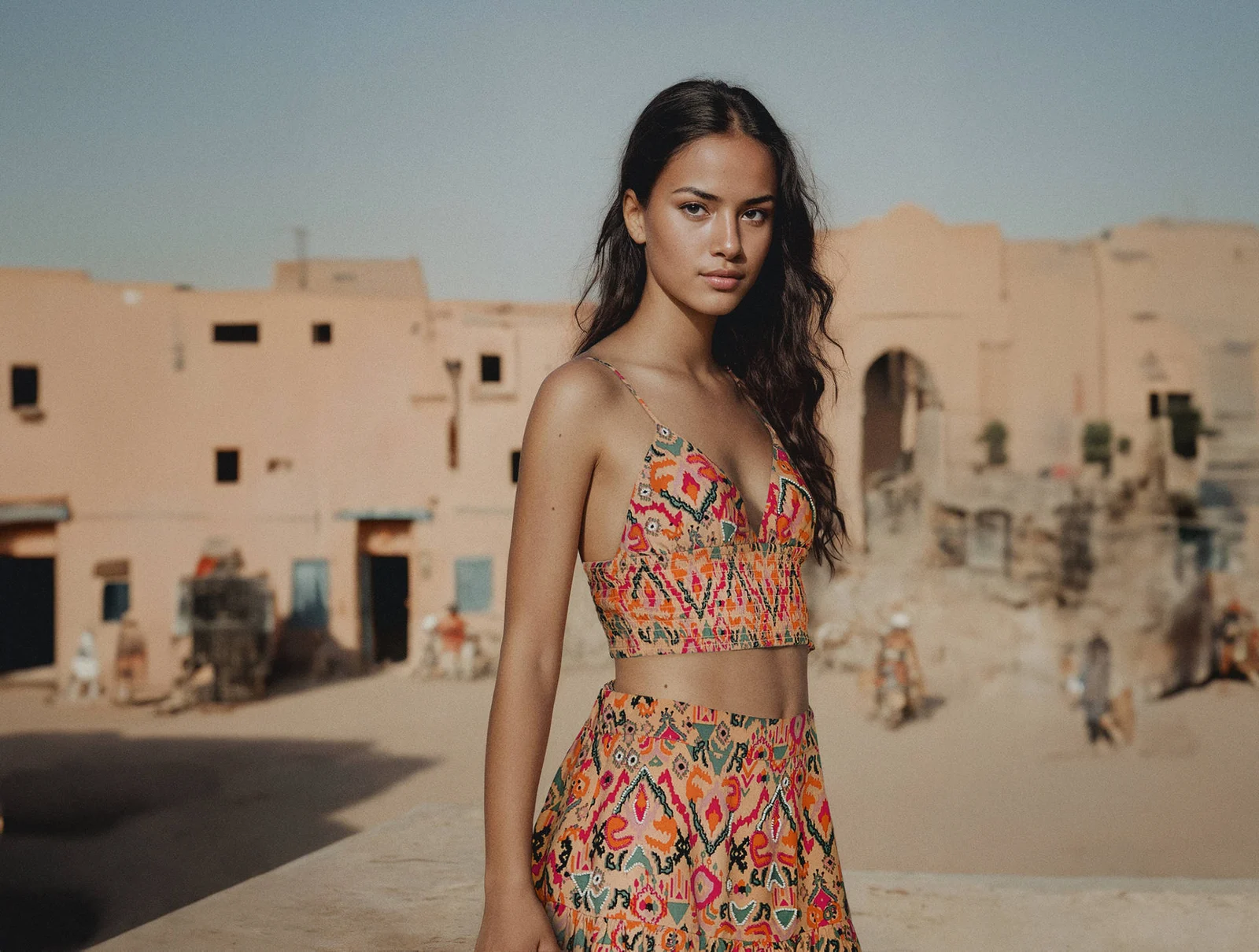
Mango’s July 2024 release says its Sunset Dream workflow began with photographs of each real garment and ended with art-team selection and finishing. That does not prove every image is commerce-perfect. It does establish the useful production principle: the actual item has to enter the workflow as an accountable reference, rather than becoming an approximate memory in a prompt.
Source context: Mango creates the first campaign generated by artificial intelligence for its Teen line
Review by defect class, not by overall vibe
Do not ask ‘does it look right?’ Put the render and the reference side by side at the intended placement size, then inspect a small number of named risks. For apparel, check silhouette, seams, pattern placement, fastening, colorway and how fabric behaves. For packaging, check geometry, hierarchy, label copy, quantity, color and required marks. For a real animal or person, check identity cues and whether the image creates an unsupported impression of condition, availability or behavior.
Mark each risk pass, fail or needs owner review. A fail needs a corrective action: regenerate from a better source, composite the locked product layer, reshoot, relabel the asset as illustrative, or remove it. ‘Close enough’ is not a corrective action. The goal is to route different failures to the person who can solve them, rather than making the creative director arbitrate technical details alone.
- Identity: is it recognizably the right item or subject?
- Material truth: are construction, surface, scale and interaction believable and approved?
- Offer truth: could the image make a viewer expect a feature, availability or outcome that is not provided?
Treat a real subject as a live record
Nexus Studios describes Pedigree Adoptable as turning shelter photographs into advertising-ready images while maintaining the dog’s characteristics; its placements are described as location-sensitive and updated after adoption. That makes a useful warning for any dynamic asset: the generated image is only one part of the claim. The linked record, availability and withdrawal process must be reviewed as seriously as the pose.
Our recommendation is a release check with two owners: a fidelity approver checks the asset against its reference; an operational approver checks that the destination, inventory or listing is current. If either is missing, hold the asset until the appropriate review is complete. A beautiful image of something unavailable is more dangerous than an imperfect still because it asks the audience to act.
Source context: Pedigree Adoptable | Nexus Studios
Keep the evidence with the approved file
The handoff should contain the final asset ID, source-reference IDs, reviewer name, checks performed, version, date and any allowed caveat. Add a thumbnail pair: source on the left, approved output on the right. This is deliberately boring. It lets a retailer, media team or regional producer see what was verified without rereading a creative thread.
Run a post-release sample too. Capture the asset as it appears in the channel, compare it with the approved export, and record any platform crop, compression or dynamic substitution. Fidelity can fail after approval when a placement changes the part of the image that was doing the explanatory work.
Sources & evidence limits
Source-backed facts are distinguished from the editorial workflow proposed here. Brand and agency accounts document their own work, not independent proof of performance. Read the linked source for its scope.
- Mango creates the first campaign generated by artificial intelligence for its Teen line
Mango states that real garment photographs informed generation and that its art team selected and finished images.
Checked 2026-09-19 · Source published 2024-07-10 - Pedigree Adoptable | Nexus Studios
Nexus describes adapting shelter photographs while retaining dog characteristics and updating placements after adoption.
Checked 2026-09-19 · Source publication date not established